

Pros and Cons of Living in Las Vegas: What to Know Before You Move
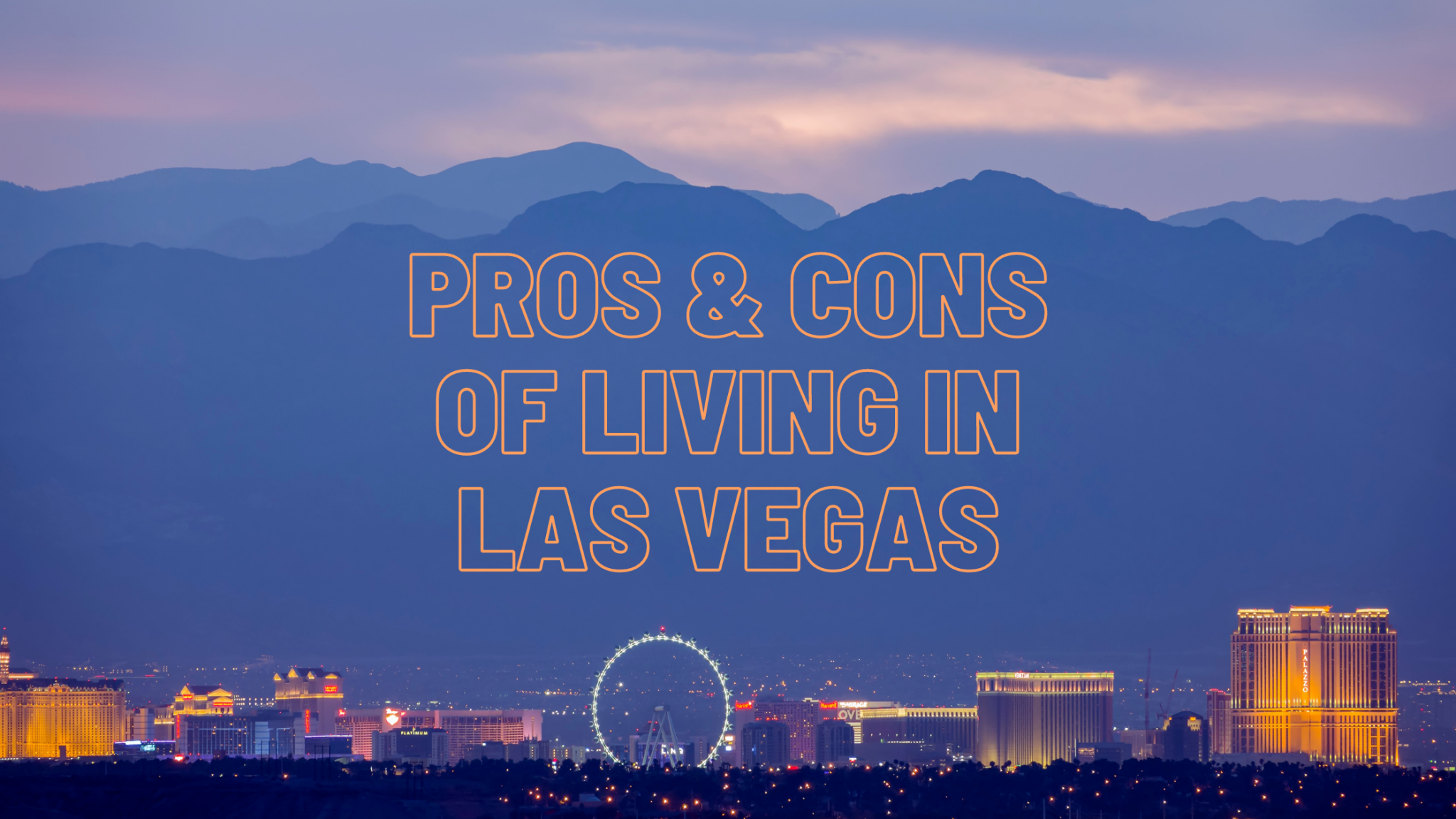
Living in Las Vegas is very different from visiting it.
The Strip may be the city’s most famous feature, but everyday life usually revolves around residential neighborhoods, work, grocery stores, parks, restaurants, schools, and driving across the valley. For many residents, the casinos are simply part of the backdrop.
Las Vegas has some genuine advantages: no state individual income tax, excellent access to entertainment and dining, a major airport, outdoor recreation, and generally mild winters. The tradeoffs are equally real, including extreme summer heat, car dependence, higher air-conditioning costs, and a desert environment that is very different from greener parts of the country.
If you’re considering a move, here are the pros and cons that actually matter.
Quick Take: Is Las Vegas a Good Place to Live?
Las Vegas can be a great fit if you value sunshine, entertainment, easy air travel, outdoor recreation, and Nevada’s tax structure.
It may be less appealing if you strongly dislike extreme heat, want to live without a car, prefer a lush green environment, or expect the cost of housing to be as inexpensive as Las Vegas once was.
The bigger takeaway: Las Vegas is neither the bargain paradise nor the nonstop casino town it is sometimes portrayed as. It’s a large, growing metropolitan area with some unusual advantages and some very real compromises.
The Pros of Living in Las Vegas
1. Nevada Has No State Individual Income Tax
This remains one of the clearest financial advantages of living in Nevada.
Nevada does not impose an individual state income tax on wages and salaries. For someone relocating from a state with a significant state income tax, that can make a noticeable difference in take-home income.
Of course, that does not mean Nevada is tax-free. Residents still encounter sales taxes, property taxes, vehicle costs, and other taxes and fees.
But the lack of an individual state income tax is a legitimate advantage.
2. Entertainment and Dining Are Hard to Match
Living in Las Vegas gives you access to an unusually large concentration of restaurants, concerts, professional sports, major events, shows, and entertainment.
The useful part for residents is that you do not have to spend your life on the Strip to benefit from it.
There are restaurants, casinos, entertainment districts, neighborhood bars, local events, sports venues, and shopping areas throughout the valley.
And when there is a concert, game, restaurant, or major event you actually want to attend, it is often happening in your own city.
3. Outdoor Recreation Is Surprisingly Close
One of the biggest misconceptions about Las Vegas is that there is nothing outside the city except empty desert.
Red Rock Canyon National Conservation Area sits only about 17 miles west of the Strip and offers hiking, cycling, climbing, scenic drives, and extensive desert scenery.
Residents also have access to Lake Mead, Valley of Fire, Mount Charleston, Sloan Canyon, and numerous trails throughout Southern Nevada.
For anyone who likes the outdoors, the ability to leave a major metropolitan area and reach open desert or mountains relatively quickly is a meaningful advantage.
4. Harry Reid International Airport Makes Travel Easy
Living near a major destination city comes with an underrated benefit: air service.
Harry Reid International Airport is one of the country’s busiest airports and offers nonstop service to a large number of domestic and international destinations.
The airport is also located surprisingly close to much of the central Las Vegas Valley.
For frequent business travelers, people with family in other states, or anyone who simply likes to travel, convenient airport access can be one of the strongest practical advantages of living here.
5. Winters Are Mild
Summer gets most of the attention, but Las Vegas weather has another side.
Winters are generally mild, and much of fall, winter, and spring can be very comfortable for outdoor activities.
According to National Weather Service climate normals, average daytime highs range from about 59°F in January to the upper 70s by April.
For someone relocating from an area with months of snow, ice, or gray winter weather, that can be a major lifestyle change.
6. You Can Choose From Very Different Parts of the Valley
Las Vegas is not one uniform environment.
Someone relocating here might compare Summerlin, southwest Las Vegas, northwest Las Vegas, central neighborhoods, North Las Vegas, Green Valley, or Henderson depending on where they work and how they want their daily routine to function.
If you’re still figuring out the geography, our step-by-step guide to moving to Las Vegas is a useful place to start.
The variety is a benefit, but it also leads directly into one of the city’s biggest drawbacks.
The Cons of Living in Las Vegas
1. Summer Heat Is Serious
This is the obvious one, but newcomers can still underestimate it.
Las Vegas normally averages a July daytime high of roughly 104°F, and periods of even more extreme heat occur.
That changes everyday life.
During the hottest months, dog walks, hiking, errands, outdoor exercise, and children’s activities may shift toward early mornings and evenings. A car sitting outside becomes extremely hot. Air conditioning goes from an amenity to an essential part of the household.
If you genuinely dislike heat, Las Vegas summers should be taken seriously before you move.
2. Air Conditioning Can Affect Your Budget
The flip side of desert sunshine is summer electricity use.
A larger home, older HVAC system, poor insulation, temperature preference, and other factors can all affect what you spend keeping a home comfortable.
That is why comparing Las Vegas housing purely by rent or mortgage payment can be misleading.
When evaluating a home, consider the total monthly housing cost, not just the advertised price.
The same principle applies when deciding whether to buy or rent. Our current Las Vegas housing market guide looks more closely at current prices, inventory, rents, and mortgage conditions.
3. Most Residents Will Find a Car Much Easier
Southern Nevada does have a public transit network operated by the Regional Transportation Commission, including routes throughout Las Vegas and Henderson.
But Las Vegas is geographically spread out, and many residential areas are considerably easier to navigate by car.
This matters when choosing where to live.
A property that looks inexpensive or attractive online may be less appealing if it creates a long daily drive across the valley.
One of our strongest recommendations for anyone relocating here is simple: choose your home around the places you will actually go every day, especially work.
4. Housing Is Not as Cheap as the Old Las Vegas Reputation Suggests
Las Vegas may still compare favorably with some expensive coastal markets, but describing it broadly as an “affordable housing market” is increasingly misleading.
Home prices rose substantially over the past decade, and Las Vegas is now a major metropolitan housing market rather than an inexpensive hidden alternative.
The good news in 2026 is that buyers currently have more inventory and negotiating room than they did during the most competitive years of the market.
But newcomers should arrive with realistic expectations.
If you are relocating and do not yet know where you want to live, there can be value in renting before making a permanent decision. Our complete Las Vegas relocation guide goes deeper into that strategy.
5. The Desert Landscape Is Not for Everyone
Las Vegas has impressive scenery, but it is desert scenery.
Expect rock, mountains, native desert plants, gravel landscaping, palms, and drought-conscious landscapes rather than the dense lawns and tree canopy found in many parts of the country.
Some neighborhoods have mature landscaping and large parks. Others feel distinctly desert-oriented.
This is largely a matter of personal preference.
Someone who loves open desert and mountain views may see it as an advantage. Someone moving from the Pacific Northwest may experience it very differently.
6. Tourism Can Occasionally Disrupt Local Life
Most Las Vegas residents do not deal with tourist crowds every day.
If you live and work away from the resort corridor, you can go surprisingly long stretches without interacting with the Strip at all.
The impact becomes more noticeable when your route takes you near major resorts, Allegiant Stadium, T-Mobile Arena, the convention center, or other event areas.
Large conventions, sporting events, concerts, Formula 1, and holiday weekends can temporarily change traffic patterns.
Locals generally learn when and where that matters and plan around it.
What About the Cost of Living in Las Vegas?
The answer depends heavily on where you’re coming from.
Someone relocating from coastal California may view Las Vegas housing and taxes very differently from someone arriving from a lower-cost market.
Instead of relying on a broad “Las Vegas is affordable” claim, compare the costs that will actually affect you:
-
Housing
-
Electricity
-
Transportation
-
Insurance
-
Groceries
-
Healthcare
-
Taxes
-
HOA fees where applicable
-
Your actual commute
That gives you a much better picture than a national cost-of-living ranking.
Should You Live in Las Vegas Before Buying a Home?
If you already know Southern Nevada well, you may be comfortable choosing a permanent neighborhood immediately.
If you don’t, spending some time here first can make sense.
Las Vegas looks straightforward on a map, but daily life in Henderson can feel very different from Summerlin, southwest Las Vegas, or the northwest valley. Your preferred location may also change once you experience your actual commute.
This is one reason some people relocating to Las Vegas use furnished monthly housing as a transition.
702 Housing provides fully furnished rentals in Las Vegas and Henderson for stays of 31 days or longer. Furniture, utilities, housewares, and high-speed internet are included, allowing someone to get settled without immediately committing to a permanent home or moving an entire household twice.
It is not necessary for every relocation.
But if you are genuinely unsure where you want to live, flexibility can be useful.
Pros and Cons of Living in Las Vegas: FAQ
Is Las Vegas a good place to live year-round?
It can be, particularly if you enjoy mild winters, sunshine, entertainment, and desert recreation. The biggest seasonal adjustment is summer, when extreme heat changes how many residents structure their days.
Does Nevada really have no state income tax?
Yes. Nevada does not impose an individual state income tax on wages and salaries. Residents still pay other taxes and fees.
Do you need a car to live in Las Vegas?
Not necessarily, but a car makes everyday life substantially easier in many parts of the Las Vegas Valley. Public transit exists, but the region is spread out and your experience depends heavily on where you live and work.
Is Las Vegas still affordable?
That depends on what you’re comparing it with. Housing can remain less expensive than some major coastal cities, but Las Vegas home prices and rents have risen substantially over the past decade. It should no longer be assumed to be a low-cost housing market.
Is there much to do in Las Vegas besides gambling?
Yes. Residents have access to restaurants, professional sports, concerts, outdoor recreation, hiking, cycling, shopping, community events, and nearby destinations including Red Rock Canyon, Lake Mead, and Mount Charleston.
Is Living in Las Vegas Right for You?
Las Vegas offers an unusual combination.
You get a major entertainment and travel hub surrounded by desert, mountains, and residential communities that can feel surprisingly removed from the Strip.
The advantages are real: no individual state income tax, mild winters, easy travel, entertainment, dining, and outdoor access.
So are the compromises: intense summer heat, driving, air-conditioning costs, and housing that is no longer as inexpensive as its reputation suggests.
If those tradeoffs work for you, Las Vegas can be an excellent place to live.
If you’re still deciding, there is no substitute for spending some time here and experiencing everyday life for yourself. The right answer usually becomes much clearer once Las Vegas stops feeling like a destination and starts feeling like a place you could actually call home.