
Building a New Home in Las Vegas: What the Builders Won’t Put in the Brochure
Choosing a builder is the easy part of building a new home in Las Vegas. Every major national builder here produces a decent house, and the differences between them are mostly about price segment, how much you can customize, and what comes standard.
The hard parts come after you sign: a closing date that moves, a design center that costs more than you budgeted, a lot you cannot change later, and a tax bill with a line item nobody explained. Those are the things worth understanding before you pick a floor plan.
Key Takeaways
- Builders in Las Vegas differ mainly by price segment and customization model, not by construction quality in any way most buyers can evaluate.
- Your lot is the one decision you can never change. Upgrades can wait; the lot cannot.
- Closing dates given at contract signing are estimates. Treat every one of them as a moving target until the home passes final inspection.
- Many new Las Vegas communities carry SID or LID bonds, which add a significant line to your property tax bill for years.
- Structural options must be selected early. Cosmetic upgrades can usually be done later for less.
- An independent pre-drywall inspection is the highest-value few hundred dollars you will spend in the whole process.
- Plan your housing with a buffer. Building without a fallback is how people end up in a hotel with their furniture in storage.
Start With the Lot, Not the Floor Plan
Model homes are built to sell floor plans. That is their job, and they do it well.
But you can repaint a wall, replace a countertop, and finish a basement years after closing. You cannot move the house. Lot selection is permanent, and in this valley it carries consequences that are not obvious from a plat map.
Things worth walking the site to check:
Orientation. Which direction do the main living spaces and largest windows face? West-facing glass in Las Vegas takes direct afternoon sun in July, and the cooling load follows. East-facing gets morning sun and shade by afternoon.
Grade and drainage. Where does water go during a monsoon storm? Look at whether the lot sits high or low relative to its neighbors and where the drainage swales run.
What is next to you, and what is coming. A lot backing to open desert today may back to the next phase in eighteen months. Ask the sales office for the phasing map, not just the current site plan.
Noise and access. Proximity to the community entrance, a collector street, a school, or a commercial pad changes daily life more than an upgraded backsplash does.
Utility placement. Transformers, pedestals, and utility easements land somewhere. Sometimes it is your side yard.
Premium lots cost more for a reason, and sometimes the premium is worth skipping. But make that trade deliberately rather than discovering it after the framing goes up.
How the Build Actually Runs
Understanding the sequence tells you what is normal and what is a warning sign.
Permitting and site work. Plans go through the jurisdiction — Clark County, the City of Las Vegas, Henderson, or North Las Vegas, each with its own timelines. Grading and utility stubs follow.
Foundation. Most Las Vegas homes are post-tension slabs on grade. Soil conditions here include caliche, a naturally cemented layer that can slow excavation considerably.
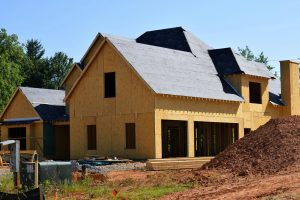
Framing. The fastest-looking phase. A house appears in days and then seems to stall, which is normal.
Rough-ins and inspections. Plumbing, electrical, and HVAC go in, then get inspected before anything is covered. This phase involves the most municipal inspections and is where scheduling delays concentrate.
Insulation and drywall. Once drywall is up, everything behind it is invisible. This is the deadline for any inspection you want done on the structure.
Finishes. Cabinets, flooring, countertops, fixtures, paint, trim. Material lead times drive this phase, and specialty selections are the usual culprit when it drags.
Exterior and landscaping. Stucco, roofing, driveway, front yard landscaping per community standards.
Final inspection and certificate of occupancy. The jurisdiction signs off. Only after this can you close.
Orientation and blue-tape walk. You walk the house with the builder and mark defects for correction.
Two Las Vegas-specific realities affect this sequence. Extreme summer heat limits when concrete can be poured and when roofing crews can work safely, and monsoon storms in July and August stop outdoor work outright. Both are ordinary parts of building here, and both cost days.
Why Closing Dates Move
This is the single most consequential thing to understand, and the source of most of the misery in the process.
The date you receive at contract signing is an estimate built on assumptions about permits, inspections, trade crew availability, and material deliveries. Any one of those slipping moves the date. Several slipping moves it substantially.
The common causes, in roughly the order you will encounter them:
- Inspection scheduling. Jurisdictions schedule inspections on their own timelines. A backlog adds days at each of several stages.
- Trade crew availability. Framers, electricians, plumbers, and drywall crews rotate across many houses. A crew running behind on the house before yours pushes yours.
- Material lead times. Windows, cabinets, appliances, and electrical equipment have all had extended lead times in recent years. A single backordered item can hold a phase.
- Weather. Monsoon season and extreme heat both stop work.
- Utility connections. Power, gas, and water connections depend on the utility’s schedule, not the builder’s.
- Change orders. Every change you request has a schedule cost, even small ones.
None of this means your builder is failing. It means the date is a forecast. The failure mode is not the delay itself — it is planning your life as though the first date were a commitment.
The practical rule: do not sell your current home, end your lease, or schedule movers based on an early estimated closing date. Wait until the home passes final inspection and you have a certificate of occupancy. Anything before that is a guess, and the closer you get, the better the guess becomes.
The Design Center
Options are where budgets go.
Builder options are priced with margin built in, often well above what the same work would cost after closing. That is not a scandal; it is the business model, and it buys you convenience and a single warranty.
The useful distinction is structural versus cosmetic.
Structural options — room extensions, added bedrooms, a casita, a bathroom relocation, an extended garage, additional windows, pre-wiring — must be selected before the plans are finalized. Once framing is underway, they are gone or expensive.
Cosmetic options — flooring, countertops, backsplashes, light fixtures, paint, cabinet hardware — can generally be done after closing, often for less. The tradeoff is living through the work and coordinating it yourself.
A reasonable approach: spend on what you cannot change later, and be selective about what you can. And get the option list in writing with prices before you commit, rather than deciding under pressure in a showroom appointment.
The Tax Line Nobody Mentions
If you are moving from out of state, this is the one that surprises people.
Many new Las Vegas communities are built on land where infrastructure — roads, sewers, streetlights, hydrants — was financed through a Special Improvement District (SID) or Limited Improvement District (LID). Rather than the developer absorbing that cost into the home price, it is assessed to the property as a bond and appears on your tax bill.
It can add a meaningful amount annually and typically runs for many years. It is usually possible to pay it off early, and the outstanding balance transfers with the property when you sell.
Ask two questions before you sign: is there a SID or LID on this parcel, and what is the current outstanding balance and annual assessment? A sales office should be able to tell you. If the answer is vague, ask again in writing.
Also budget for the HOA. Most new construction in this valley sits inside a master-planned community with an HOA, and larger master plans often have both a sub-association and a master association fee.
Get an Independent Inspection
Many buyers skip inspections on new construction, reasoning that a brand-new home has been inspected by the jurisdiction already.
Municipal inspections verify code compliance. They are not a quality review on your behalf, and they are not looking out for your interests specifically.
Hire an independent inspector for two visits:
Pre-drywall. Before insulation and drywall cover the framing, plumbing, and electrical. This is the only opportunity to see how the house is actually built. It is also the point at which problems are cheapest to fix.
Final, before closing. A full inspection of finishes, systems, and operation, before you sign and before your leverage disappears.
The cost is a rounding error against the price of the house. Builders are generally accustomed to this and accommodate it. A builder who resists is telling you something.
Walkthroughs and Warranty
You will typically do a walkthrough before closing where defects are marked for correction — the blue-tape walk. Be thorough and be specific. Operate every window, every faucet, every outlet, every door. Run the HVAC. Check that drawers and doors align. Photograph everything you mark.
New home warranties in this market generally follow a tiered structure: roughly one year on fit and finish, two years on major systems, and ten years on structural elements. Read the actual warranty document, since coverage and claim procedures vary by builder.
Most builders schedule an eleven-month follow-up before the first-year coverage expires. Keep a running list from move-in and submit it before that deadline. Settling and minor cracking in the first year are normal here; the eleven-month visit is when they get addressed.
Who Builds in Las Vegas
The valley’s new construction is dominated by national builders working across a set of large master-planned communities. Rather than ranking them, here is how they differ in ways that actually affect your decision.
Lennar operates on an “Everything’s Included” model, bundling features that other builders sell as options. Less customization, more predictable pricing.
KB Home uses a built-to-order approach with substantial personalization available at accessible price points, and a design studio process where you select finishes individually.
Toll Brothers occupies the luxury and semi-custom end, with larger homes and deeper customization.
Pulte builds across a range of segments, and its Del Webb brand operates age-restricted 55+ communities.
D.R. Horton targets the entry-level and first-time buyer segment, and has been among the most aggressive locally with financing incentives such as rate buydowns.
Tri Pointe (formerly Pardee in this market), Richmond American, Woodside, Century Communities, and LGI all build across various segments here.
Blue Heron is the local outlier — high-end, architecturally distinctive modern homes, very different from the production model.
Where They’re Building
Active construction as of 2026 is concentrated in a handful of master plans:
- Summerlin on the west side, with current activity concentrated in Summerlin West and new acreage recently opened for development.
- Cadence in Henderson, a large master plan now in later-stage buildout.
- Meriden, a newer Henderson master plan.
- Inspirada in Henderson, in its final phases.
- Valley Vista and Tule Springs in North Las Vegas, which is currently the valley’s most accessible price segment.
- Skye Canyon and Sunstone in the northwest.
- Lake Las Vegas on Henderson’s eastern edge.
Community availability changes constantly — phases sell out, new sections release, and builder lineups shift within a master plan. Confirm what is actually selling before planning around any specific neighborhood.
Where You’ll Live While It’s Being Built
This is the part most buyers plan last and regret first.
If you are relocating from out of state, or selling a home to buy this one, you need somewhere to live for a period whose end date keeps moving. A hotel works for a couple of weeks. A standard twelve-month lease does not fit a build that finishes in five months. Month-to-month options in unfurnished apartments are uncommon here, and furnishing a place you will leave makes little sense.
A furnished monthly rental fits the shape of the problem. You arrive with luggage rather than a moving truck, you are in a real home rather than a hotel room, and the lease continues month to month rather than forcing you to guess your closing date.
Build in buffer. Whatever your estimated closing date, plan your housing to extend past it. Extending a furnished rental by a month is a phone call. Finding somewhere to live on two weeks’ notice while your furniture is on a truck is not.
702 Housing leases furnished condos and apartments in Las Vegas and Henderson for stays of 31 days or longer. Monthly rent includes electricity, gas, water, trash, parking, community amenity access, and high-speed internet, and every home has a full-size washer and dryer. After the minimum stay, the lease continues month to month, which is what makes it work for a moving closing date.
Frequently Asked Questions
How long does it take to build a new home in Las Vegas? Production homes typically take several months from foundation to certificate of occupancy, though the range is wide and depends on permitting, inspection scheduling, trade availability, and material lead times. Treat any date given at contract as an estimate.
Why do new home closing dates keep moving? Because the date depends on factors outside the builder’s direct control — municipal inspection schedules, subcontractor availability, material deliveries, weather, and utility connections. Delays are normal. Planning around an early estimate is what causes problems.
What is a SID or LID on a Las Vegas home? A Special or Limited Improvement District bond that financed infrastructure for the community. It is assessed to the property and appears on the tax bill, typically for many years. Ask for the outstanding balance and annual assessment before signing.
Should I get an inspection on a brand-new home? Yes. Municipal inspections check code compliance, not quality on your behalf. An independent pre-drywall inspection and a final inspection before closing are both worth the cost.
Are builder upgrades worth it? Structural options usually are, because you cannot add them later. Cosmetic upgrades are often cheaper to do after closing, though you trade convenience and single-warranty coverage for the savings.
Do I need temporary housing while my home is being built? Most buyers relocating or selling do. The challenge is the moving completion date, which makes a fixed-term lease a poor fit. A month-to-month furnished rental handles the uncertainty better.
Which builder is best in Las Vegas? There is no single answer. National builders here produce comparable quality within their price segments. The more useful questions are which one builds the floor plan you want, in the community you want, at your price point, with the customization model you prefer.
Planning the Transition
Building a home in Las Vegas goes well when you get the permanent decisions right — the lot, the structural options, the community — and stay flexible about the schedule, because the schedule will move.
If you are building or buying new construction here and need somewhere to live in the meantime, you can see our current furnished homes and availability, or tell us your estimated closing date and we will help you plan around a date that is likely to change.
You may also find our insider tips for buying new construction in Las Vegas and our Las Vegas housing market guideuseful.